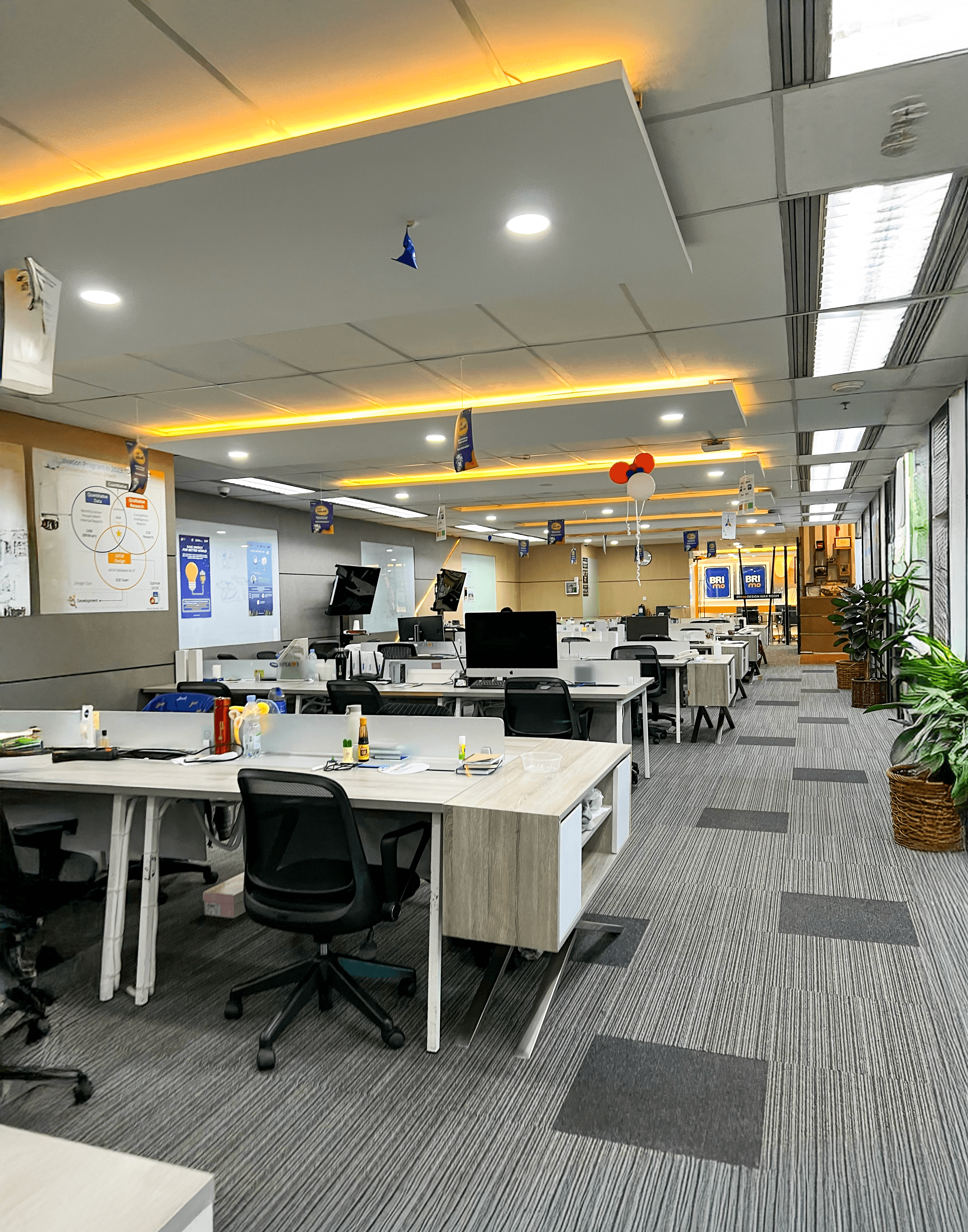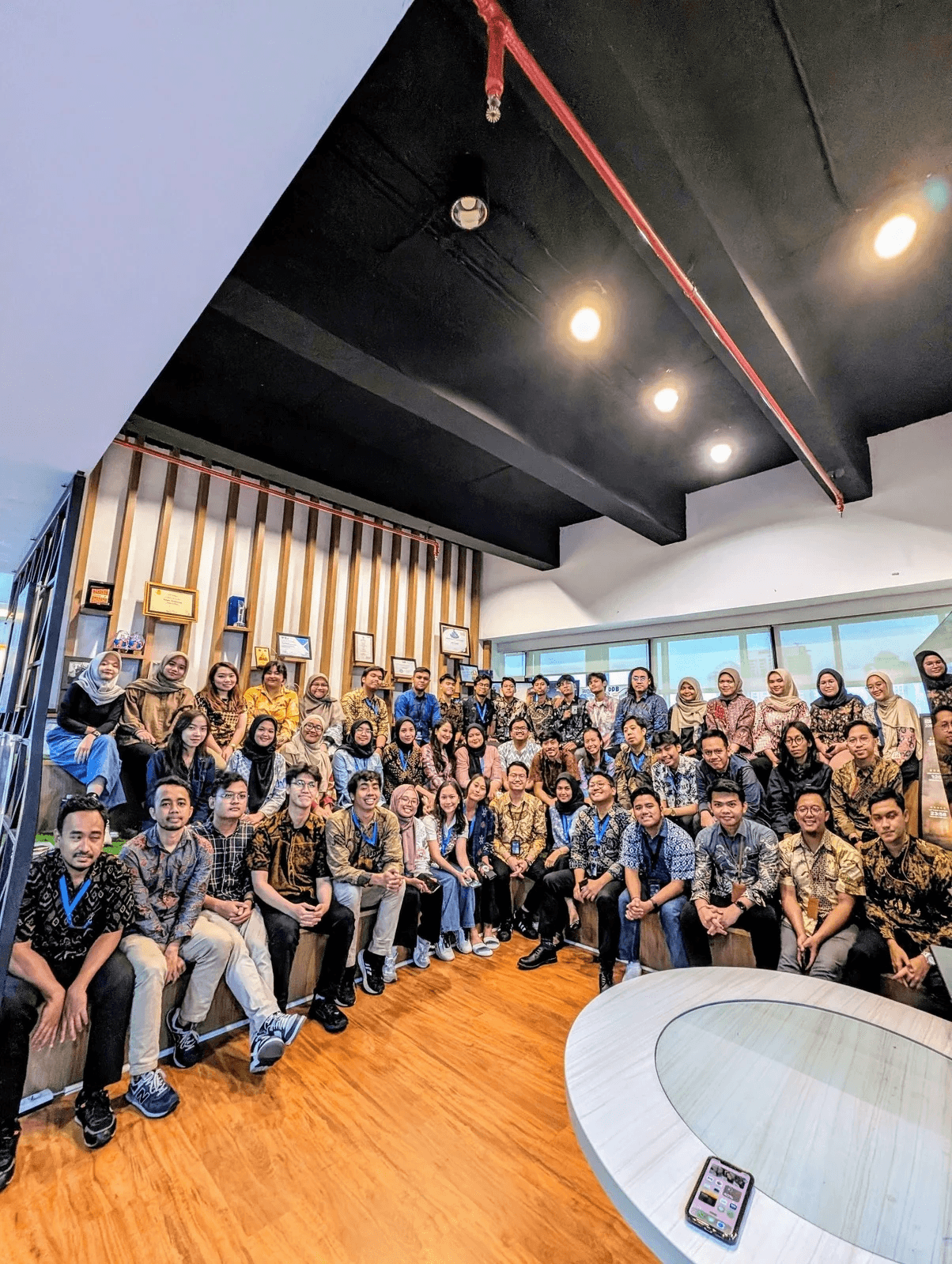


Scaling Design Operations for BRI’s 40+ Products to Accelerate Digital Innovation
UI/UX Design
Creative Team Building
Client
Bank Rakyat Indonesia (BRI)
Industry
Finance, Banking
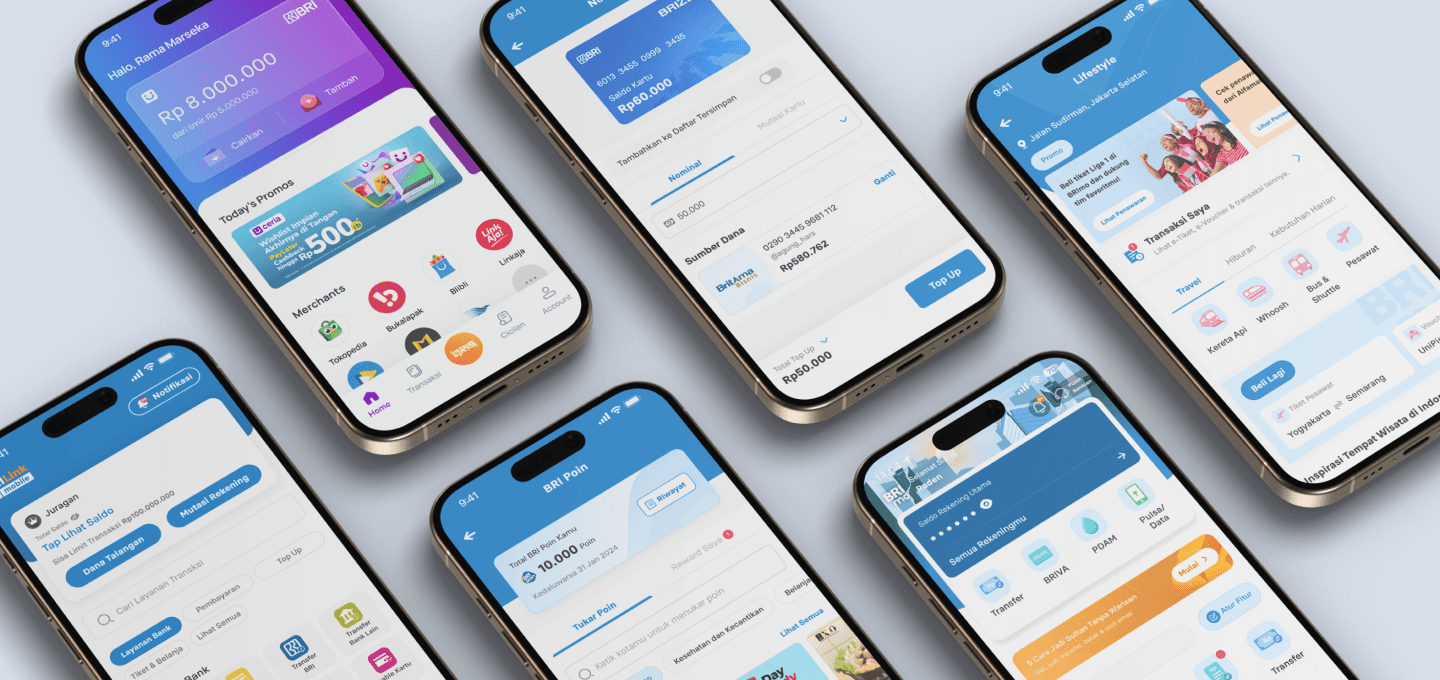
Enabling Digital Product Teams And Refining Design Operations to Meet Business Demand

/ Background
Business Ambition Exceeds The Capacity of Existing Teams
As Indonesia's largest bank, BRI set a bold roadmap to lead the digital banking landscape. The objective was clear: accelerate product improvement and innovation to outperform agile fintech competitors.
However, this ambition required managing a massive ecosystem of over 40 digital products simultaneously, ranging from customer-facing retail apps and B2B platforms to complex internal operational tools. The existing internal capabilities needed a strategic creative partner to enable the team and bridge the gap between business ambition and execution capacity.
As Indonesia's largest bank, BRI set a bold roadmap to lead the digital banking landscape. The objective was clear: accelerate product improvement and innovation to outperform agile fintech competitors.
However, this ambition required managing a massive ecosystem of over 40 digital products simultaneously, ranging from customer-facing retail apps and B2B platforms to complex internal operational tools. The existing internal capabilities needed a strategic creative partner to enable the team and bridge the gap between business ambition and execution capacity.


/ Challenge
High Demand Meets Operational Bottlenecks
High Demand vs. Limited Resources: The business side needed rapid product improvements and new features to launch. The existing design team was too small to handle the volume, creating a bottleneck where innovation stalled.
Invisible Workloads: As the pressure mounted, processes broke down. Requests were coming in through informal channels, WhatsApp chats, or verbal requests, bypassing the team leads.
This created "Shadow Tasks": Some designers were drowning in work that leadership didn't even know existed, while others had free time that went utilized.
There was no "single source of truth" to track progress.
The Need for Systemic Enabling: The root issue wasn't just a lack of manpower, but the absence of a structured workflow to manage the flow of work. It became clear that simply adding more designers to a chaotic system would only create more noise.
High Demand vs. Limited Resources: The business side needed rapid product improvements and new features to launch. The existing design team was too small to handle the volume, creating a bottleneck where innovation stalled.
Invisible Workloads: As the pressure mounted, processes broke down. Requests were coming in through informal channels, WhatsApp chats, or verbal requests, bypassing the team leads.
This created "Shadow Tasks": Some designers were drowning in work that leadership didn't even know existed, while others had free time that went utilized.
There was no "single source of truth" to track progress.
The Need for Systemic Enabling: The root issue wasn't just a lack of manpower, but the absence of a structured workflow to manage the flow of work. It became clear that simply adding more designers to a chaotic system would only create more noise.
/ Our Approach
Enabling a Human-Centered Design Ops
As a Creative Enabler, Gizalab didn’t just supply talent, we enable a human-centered design ops (creative and product team) to scale BRI’s digital division.
Scaling The Team For 40+ Products To Bridge The Execution Gap
We expanded the team with the right talent to handle the heavy workloads. We deployed a dedicated squad of designers and researchers to take ownership of over 40 digital products across Retail, B2B, and Internal Operations.
Standardizing Design Ops To Track Capacity And Remove Shadow Tasks
To eliminate the "shadow task" issue and balance workloads, we implemented a centralized Design Ops Framework. This ensured every request was tracked, prioritized, and assigned based on capacity, giving leadership full visibility into the production pipeline.
Creating Dual Workstreams To Execute Daily Tasks Without Sacrificing Future Growth
To solve the conflict between "keeping the lights on" and "inventing the future," we split the design delivery into two distinct streams:
BAU (Business As Usual) & Improvement Stream: Dedicated to executing planned updates, maintenance, and feature enhancements defined by business stakeholders.
R&D (Research & Development) & Innovation Stream: A focused team for deep research and exploration, ensuring long-term product evolution isn't buried by daily operational tasks.
As a Creative Enabler, Gizalab didn’t just supply talent, we enable a human-centered design ops (creative and product team) to scale BRI’s digital division.
Scaling The Team For 40+ Products To Bridge The Execution Gap
We expanded the team with the right talent to handle the heavy workloads. We deployed a dedicated squad of designers and researchers to take ownership of over 40 digital products across Retail, B2B, and Internal Operations.
Standardizing Design Ops To Track Capacity And Remove Shadow Tasks
To eliminate the "shadow task" issue and balance workloads, we implemented a centralized Design Ops Framework. This ensured every request was tracked, prioritized, and assigned based on capacity, giving leadership full visibility into the production pipeline.
Creating Dual Workstreams To Execute Daily Tasks Without Sacrificing Future Growth
To solve the conflict between "keeping the lights on" and "inventing the future," we split the design delivery into two distinct streams:
BAU (Business As Usual) & Improvement Stream: Dedicated to executing planned updates, maintenance, and feature enhancements defined by business stakeholders.
R&D (Research & Development) & Innovation Stream: A focused team for deep research and exploration, ensuring long-term product evolution isn't buried by daily operational tasks.


/ Impact & Expected Outcome
From Bottlenecks to A Thriving Ecosystem
By implementing this structure, we transformed a bottlenecked department into a thriving design ecosystem.
Scale: Successfully managed design delivery for 40+ digital products without compromising quality.
Efficiency: Eliminated workflow blind spots, ensuring 100% visibility on task distribution and resource allocation.
R.E.A.C.H Framework Achievement

We proved that you cannot scale a product without scaling the system behind it. We turned design from a bottleneck into a business driver.

By implementing this structure, we transformed a bottlenecked department into a thriving design ecosystem.
Scale: Successfully managed design delivery for 40+ digital products without compromising quality.
Efficiency: Eliminated workflow blind spots, ensuring 100% visibility on task distribution and resource allocation.
R.E.A.C.H Framework Achievement

We proved that you cannot scale a product without scaling the system behind it. We turned design from a bottleneck into a business driver.

/ Conclusion
Building a team is hard. We can help enable seamless growth for your creative digital division.
Whether you need to manage 40+ products or streamline your workflow, let's discuss your challenges!
Send us a message to:
info@gizalab.co
Whether you need to manage 40+ products or streamline your workflow, let's discuss your challenges!
Send us a message to:
info@gizalab.co
Ready to enable your next idea?